Gov Taxation Stances
U.S. House Candidates In PA-1
Brian Fitzpatrick (Republican)

Picture from brianfitzpatrick.com
Brian Fitzpatrick generally presents himself as a fiscally moderate Republican who supports lower taxes while maintaining funding for core government services. He has backed tax relief aimed at middle-class families and small businesses and often emphasizes bipartisan budget solutions rather than sweeping tax increases or deep spending cuts. Fitzpatrick tends to support targeted government spending in areas like public safety, infrastructure, and veterans’ services, while expressing concern about long-term federal debt and large deficit-driven spending packages. Overall, his approach favors restrained taxation paired with selective, practical government investment.
Bob Harvie (Democrat)
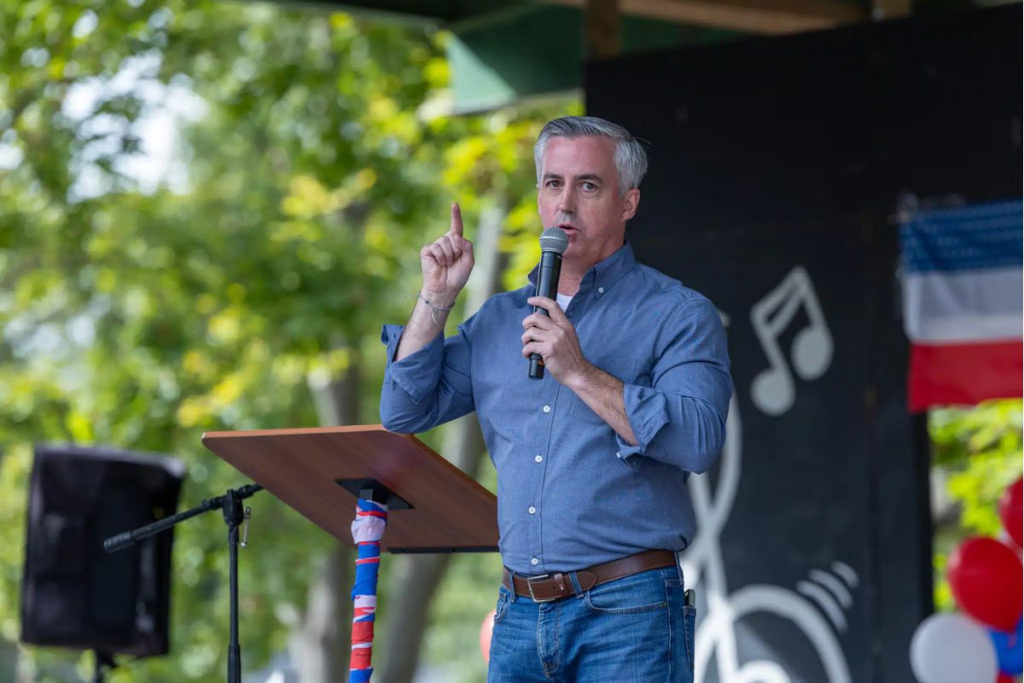
Photo curtesy of the Bob Harvie for congress campaign
Bob Harvie supports a more active role for government in taxation and spending, particularly at the local and federal levels, to ensure communities receive adequate public services. He argues that government should collect sufficient tax revenue to fund essential programs such as public health, emergency services, education, and infrastructure, especially when those services directly affect working families. Harvie has criticized cuts to public funding that shift costs onto local governments and residents, and his views align with the idea that taxes should be used as a tool to strengthen community stability and economic opportunity.
Tracy Hunt (Democrat-Former Republican)

Tracy Hunt (R) protests at the No Kings Rally in Langhorne on Oct. 18. Photo contributed.
Tracy Hunt frames taxation and spending through the lens of fairness and affordability for working people. While he has not released a detailed tax plan, his public comments suggest support for a government role that actively invests tax dollars into public goods and social programs, particularly those that reduce economic inequality. Hunt has criticized systems that favor wealthy interests and large corporations, implying support for a tax structure that places more responsibility on those with greater financial capacity while funding services that benefit the broader public.
Lucia Simonelli (Democrat)

Democrat Lucia Simonelli. From buckscountybeacon.com
Lucia Simonelli supports a strong government role in taxation and spending to address economic inequality and what she describes as an unfair concentration of wealth and power. She has spoken critically of tax systems that benefit corporations and wealthy elites while underfunding public services, and she supports using tax revenue to invest in healthcare, education, and economic opportunity. Simonelli’s perspective aligns with progressive taxation, where government spending is used intentionally to reduce disparities and support working- and middle-class communities.
Robert “Rob” Strickler (Democrat)
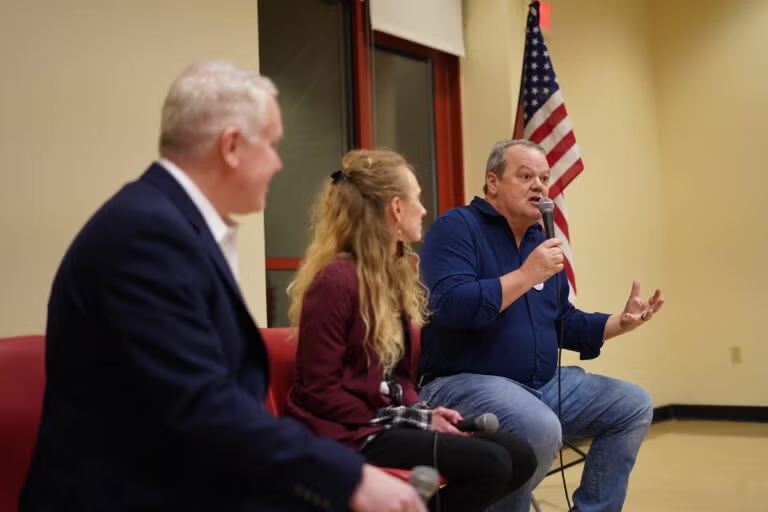
Democratic hopefuls Tracy Hunt, Lucia Simonelli and Rob Strickler held a town hall Tuesday, Jan. 13, 2026, at the Horsham Township Community Center. (Kenny Cooper/WHYY)
Robert “Rob” Strickler emphasizes the influence of money in politics and supports restructuring government priorities to better serve ordinary people. While he has not released detailed tax policy proposals, his messaging suggests support for a tax system that is more equitable and for government spending that directly improves economic security for working families. Strickler views public investment as a necessary counterbalance to corporate power and believes tax dollars should be allocated toward programs that strengthen social and economic fairness.
Pennsylvania Governor Race Candidates
Josh Shapiro (Democratic)

ShapiroPhotographer: Matt Rourke/AP Photo
Josh Shapiro, as governor of Pennsylvania, supports a pragmatic approach to taxation and spending that combines tax relief with strategic investment. He has advocated for lowering Pennsylvania’s corporate net income tax to improve competitiveness and attract jobs, while still maintaining funding for education, infrastructure, and public safety. Shapiro generally supports using existing revenue and federal funds efficiently rather than broad tax increases, and his approach reflects a balance between encouraging economic growth and sustaining core state services.
Stacy Garrity (Republican)

State Treasurer Stacy Garrity could become the state’s first female governor if she wins next year. Photo: Tom Williams/CQ-Roll Call via Getty
Stacy Garrity supports a limited-government approach to taxation and spending, emphasizing fiscal restraint and lower taxes. She argues that government should reduce spending where possible, eliminate waste, and return excess funds to taxpayers. Garrity has aligned with policies that favor shrinking government programs and limiting the scope of public spending, believing that lower taxes and smaller government lead to stronger economic outcomes. Her views prioritize taxpayer protection over expanding public services.
Bucks County Commissioners Race Candidates
Diane M. Ellis-Marseglia (Democrat)

Diane Ellis-Marseglia (Courtesy of Bucks United)
Diane M. Ellis-Marseglia, as a Bucks County commissioner, focuses on managing county tax dollars responsibly to fund local services. While she has not outlined a broad ideological tax platform, her role emphasizes ensuring that county revenue is allocated to public safety, human services, and infrastructure while maintaining fiscal stability. Her approach reflects a belief that local government has a responsibility to collect and spend taxes in ways that directly support residents’ day-to-day needs.
Robert J. “Bob” Harvie Jr. (Democrat)

From bobharvieforcongress.com
Robert J. “Bob” Harvie Jr. supports responsible taxation paired with strategic public investment at the county level. As a commissioner, he has emphasized balanced budgets while funding essential services such as emergency response, infrastructure, and social programs. Harvie Jr. generally views taxes as a necessary tool for maintaining quality local services and believes government spending should be directed toward improving community well-being and long-term stability.
Gene DiGirolamo (Republican)

Commissioner Gene DiGirolamo making remarks. Credit: Tom Sofield/LevittownNow.com
Gene DiGirolamo favors a conservative fiscal approach focused on controlling spending and limiting the tax burden on residents. As a county commissioner, he emphasizes efficient use of taxpayer dollars, balanced budgets, and caution against expanding government programs that could lead to higher taxes. DiGirolamo’s views reflect the belief that government should be financially disciplined and prioritize core services without significantly increasing taxation.